Heavy rainfall can change the conditions within slopes, hillsides, retaining systems and graded areas.
In Southern California, this deserves particular attention because periods of prolonged rain can saturate the ground, while intense rainfall can contribute to erosion, shallow landslides and other forms of slope movement. The U.S. Geological Survey identifies Southern California as particularly susceptible to rainfall-triggered shallow landslides under the right conditions.
Not every crack, wet area or shifted fence indicates a landslide. But noticeable changes following heavy rainfall should not automatically be ignored either.
Here are several conditions project teams and property owners should know how to recognize.
1. New Cracks in Soil, Pavement or Hardscape
New cracking is one of the more visible indications that ground conditions may have changed.
Pay attention to cracks that appear after rainfall in:
- Exposed soil
- Asphalt
- Concrete flatwork
- Curbs
- Walkways
- Retaining-wall areas
- Areas near the top or bottom of a slope
The location, direction and rate of change can all be important. A qualified professional can determine whether a crack is superficial or related to deeper ground movement.
2. Bulging or Uneven Ground
Soil movement may sometimes appear as a new bulge, mound or change in the shape of the ground.
The California Geological Survey identifies bulging at the base of slopes as one condition to watch for after periods of heavy rainfall.
On an active construction site, it can be useful to compare current slope conditions with previous site photographs, surveys or observations.
3. Leaning Trees, Fences or Other Site Features
Objects that were previously vertical can sometimes provide visible evidence that the ground around them has moved.
Examples can include:
- Trees
- Fences
- Posts
- Site walls
- Utility features
- Other fixed site improvements
A single leaning tree does not establish that a slope is moving. The concern is a new or changing condition, particularly when several nearby features begin shifting at the same time.
4. New Springs, Seepage or Unexpected Water
Changes in where water appears can be important.
New seepage coming from the face of a slope, persistent wet areas, unexpected springs or drainage appearing in a new location can indicate that subsurface water conditions have changed.
The California Geological Survey specifically advises watching for new springs, seeps and excess surface erosion following periods of heavy rainfall.
For construction sites, drainage systems should also be observed for blockage, concentrated runoff or water being redirected toward sensitive slope areas.
5. Increased Erosion or New Gullies
Surface erosion is not the same thing as a deep slope failure, but uncontrolled runoff can remove soil and progressively change slope conditions.
Look for:
- New channels or gullies
- Washed-out soil
- Exposed roots or buried infrastructure
- Soil accumulating at the bottom of a slope
- Areas where runoff appears more concentrated than before
Repeated rain can enlarge relatively small erosion problems over time.
6. Movement Around Retaining Structures or Foundations
Changes around retaining walls or structures located near slopes can also merit professional evaluation.
Potential observations could include:
- New separation between a wall and adjacent pavement
- Changes in wall alignment
- Cracks that are growing or changing
- Ground settlement adjacent to a wall
- Soil pulling away from structural elements
- Changes around foundations, slabs or other site improvements
The presence of any individual condition does not establish the cause. Structural, geotechnical and drainage conditions can all be involved.
7. Small Slides or Material Moving Downhill
One of the clearest signs that conditions have changed is soil, rock or debris beginning to move downhill.
That movement might initially appear localized, such as a small amount of soil at the toe of a slope, fresh exposed soil or material falling onto a roadway or work area.
Small movements should not automatically be interpreted as harmless. They may warrant further evaluation, particularly if rainfall is continuing.
What Should You Do If You Notice These Conditions?
Safety comes first.
Do not enter an area where soil, rock or structures appear to be actively moving. If conditions present an immediate danger to people or occupied structures, move away from the affected area and contact the appropriate local emergency authorities.
Where conditions are stable enough for evaluation, useful next steps can include documenting visible changes from a safe location and bringing in the appropriate geotechnical, geological or engineering professionals to determine what is occurring.
They can evaluate site-specific conditions and determine whether monitoring, drainage improvements, stabilization or another response is appropriate.
How Are Unstable Slopes Stabilized?
There is no single stabilization system that applies to every slope.
The appropriate construction method depends on factors including soil and rock conditions, slope geometry, access, surrounding structures and the engineered design.
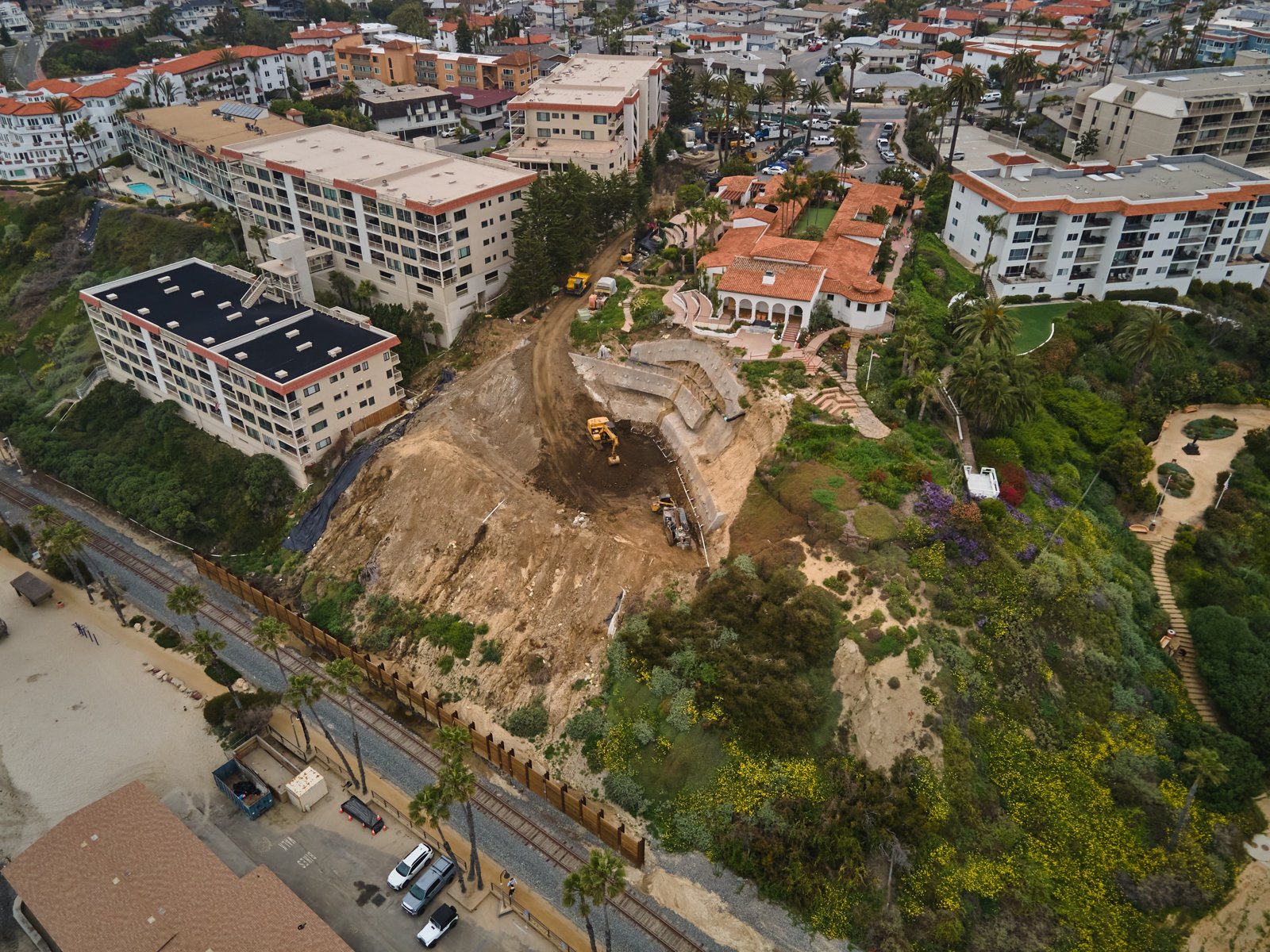
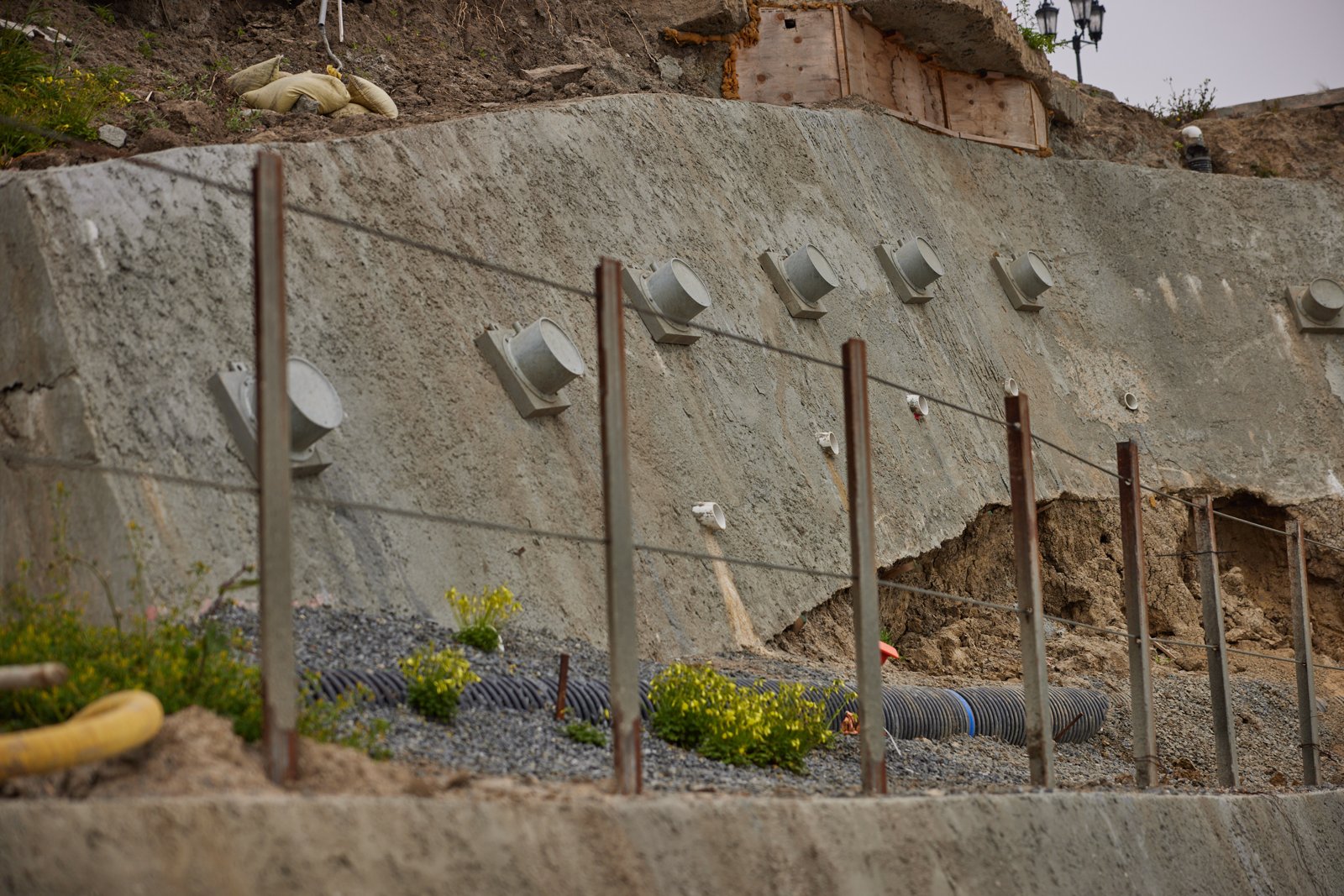
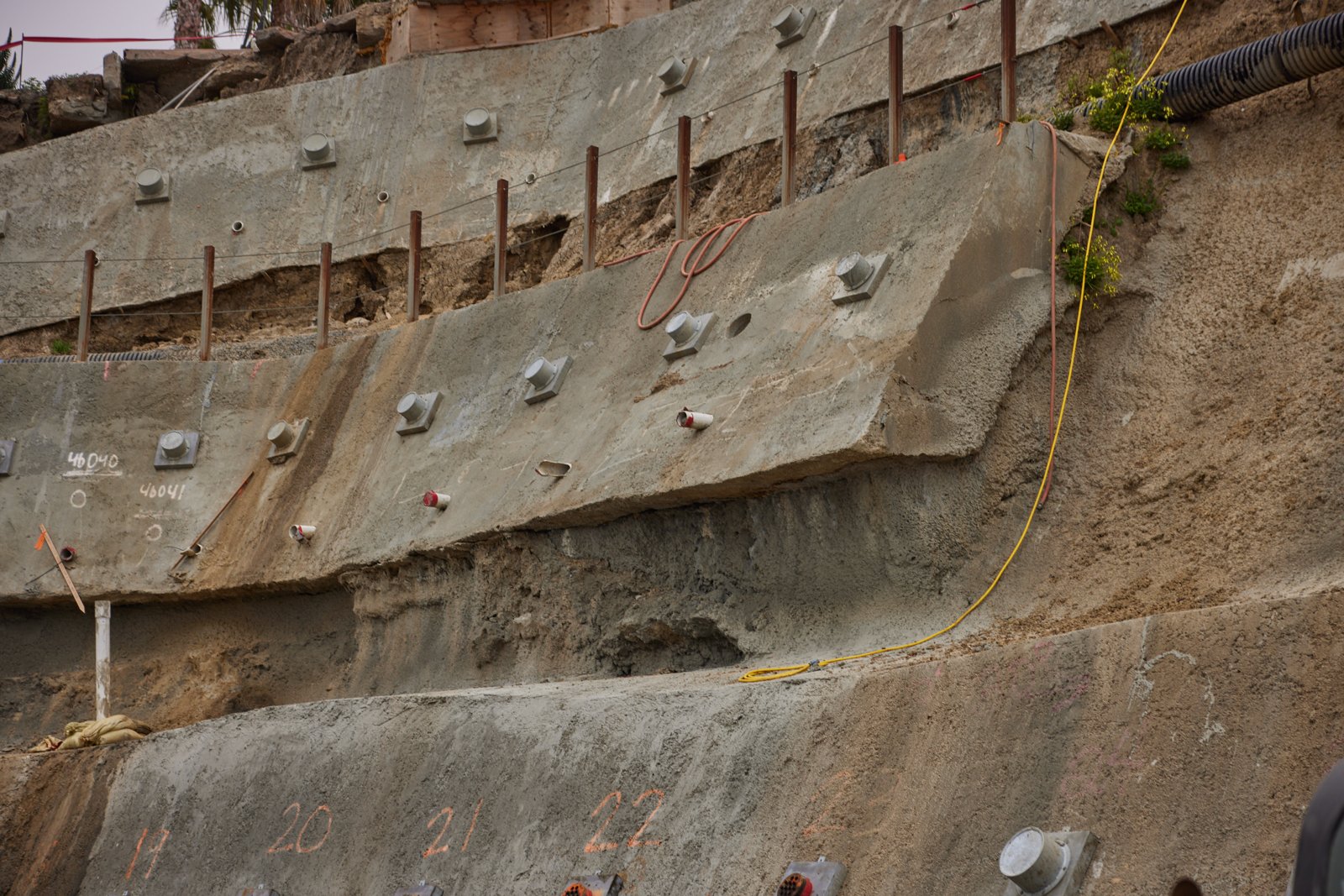
ADEI performs several types of slope stabilization and earth-retention construction, including:
- Soil nail walls
- Soldier pile walls
- Tieback systems
- Shotcrete retaining walls
- Shear pins with grade beams and tiebacks
- Limited-access drilling for difficult hillside locations
- Grading
ADEI’s existing slope stabilization service addresses work on steep and landslide-prone terrain, including locations where portable or specialized rigs are needed because conventional equipment cannot reach the work area.
Heavy Rain Is a Reason to Pay Attention, Not to Assume the Worst
Changes following a major storm do not automatically mean a slope is failing.
The important distinction is whether the site looks and behaves the same as it did before the rainfall.
New cracking, seepage, erosion, bulging or movement can provide useful early indications that conditions deserve a closer look.
For developers, contractors and project teams, identifying those changes early gives the appropriate professionals more information to work with and can help define the next steps before a construction response is developed.