Overview
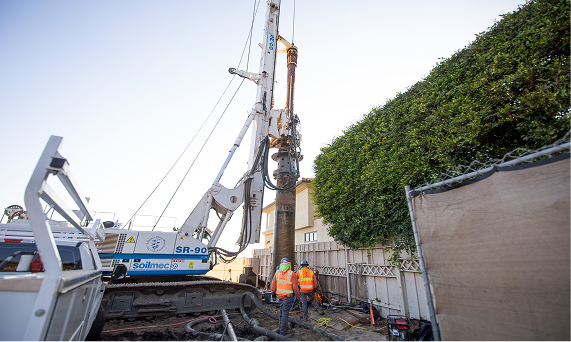
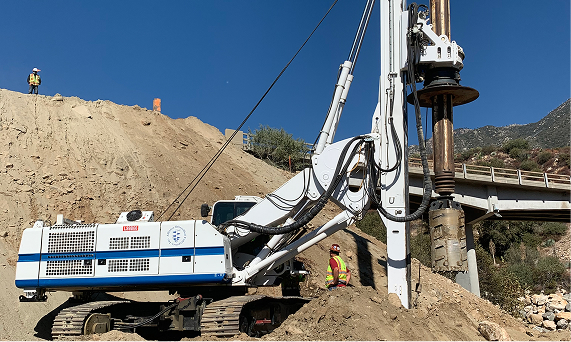
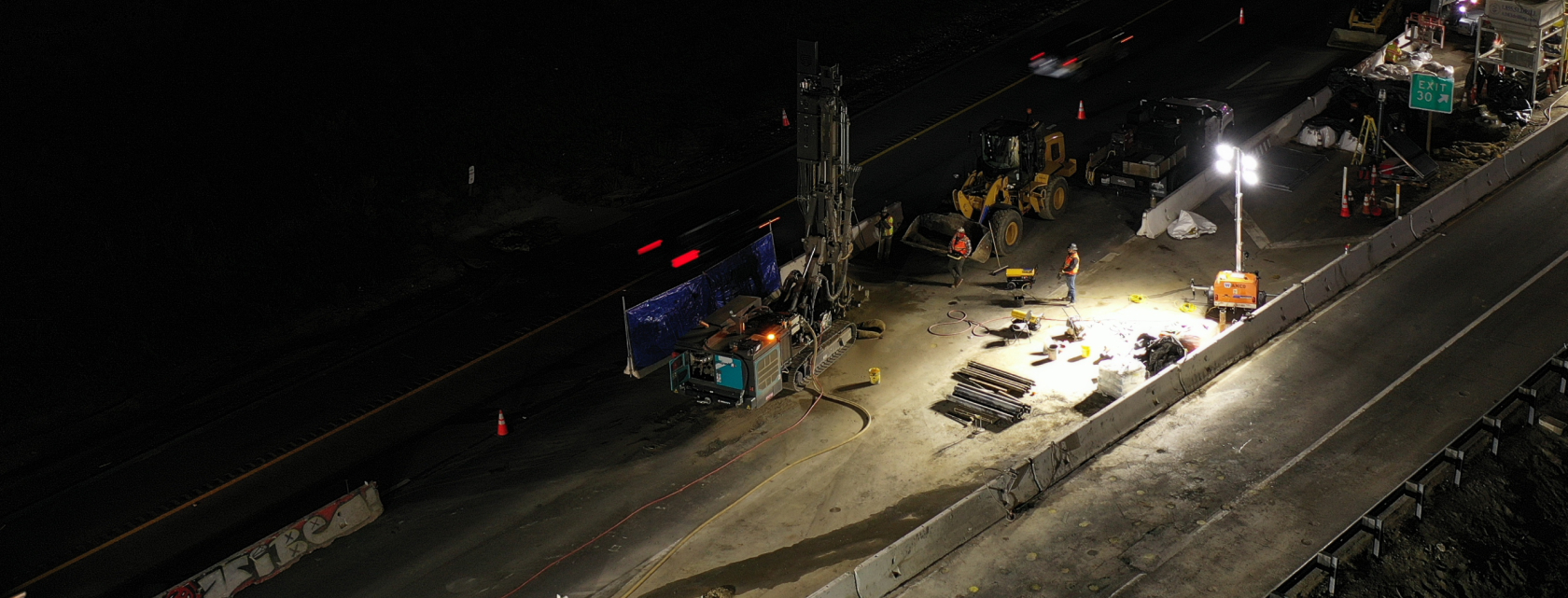
ADEI offers complete drilling and shoring services designed to support structures of any magnitude. Whether your engineering plans call for micropiles in tight spaces, large diameter caissons for bridge foundations, augercast piles, soldier piles or any other type of pile, we possess the specialized machinery and technical expertise to execute quickly and efficiently.
In addition to working from engineered plans, ADEI also provides design-build capabilities, allowing our team to collaborate early in the process and deliver value engineering solutions that improve constructability, efficiency, and overall project cost.

Deep Foundation Capabilities
We tailor our drilling approach to the specific geology and load requirements of your site:
- Micropiles: typically less than 12 inches in diameter, ideal for high-capacity loads in areas with limited access or low headroom.
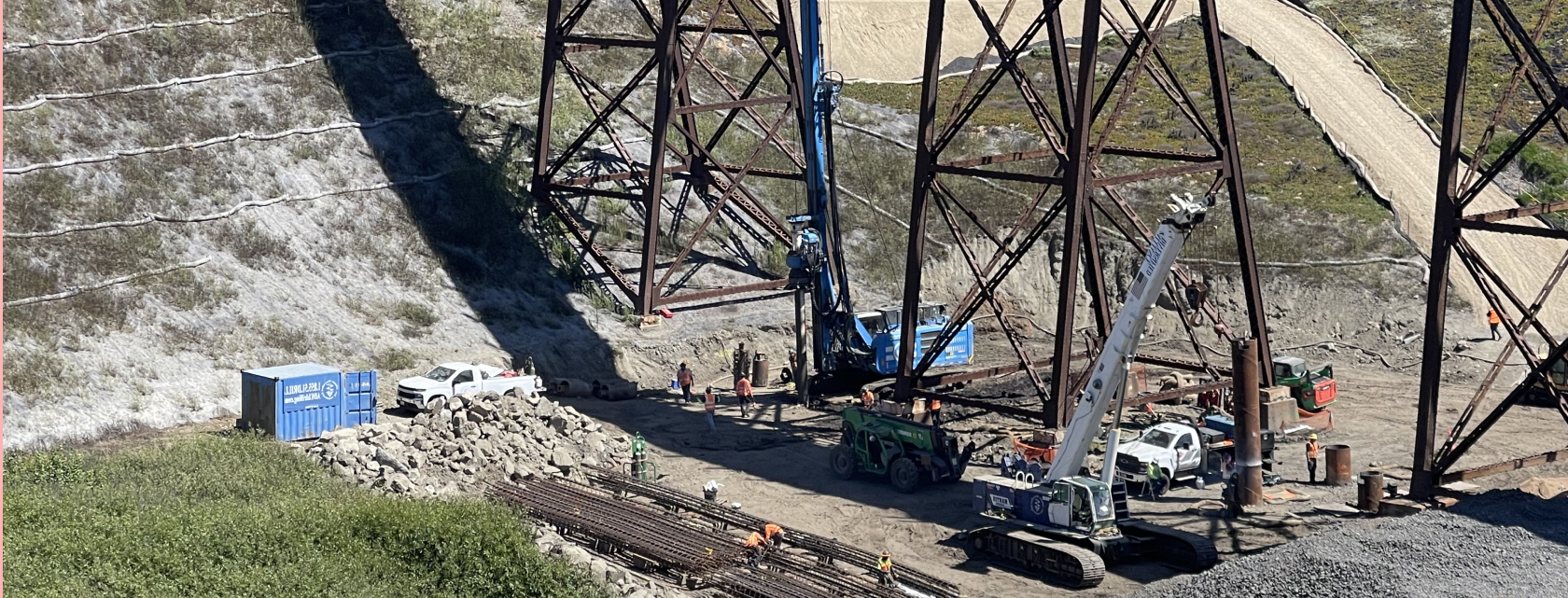
- Caissons: Large-diameter drilled shafts (up to 10 feet) used for major foundation structures, towers, and bridges.
- Auger Cast (CFA) Piles: A low-noise, low-vibration solution where grout is pumped under pressure to displace water, making it excellent for high-water-table areas.
Shoring & Earth Retention
Safety is paramount in deep excavations. Our shoring services protect your workforce and surrounding structures:
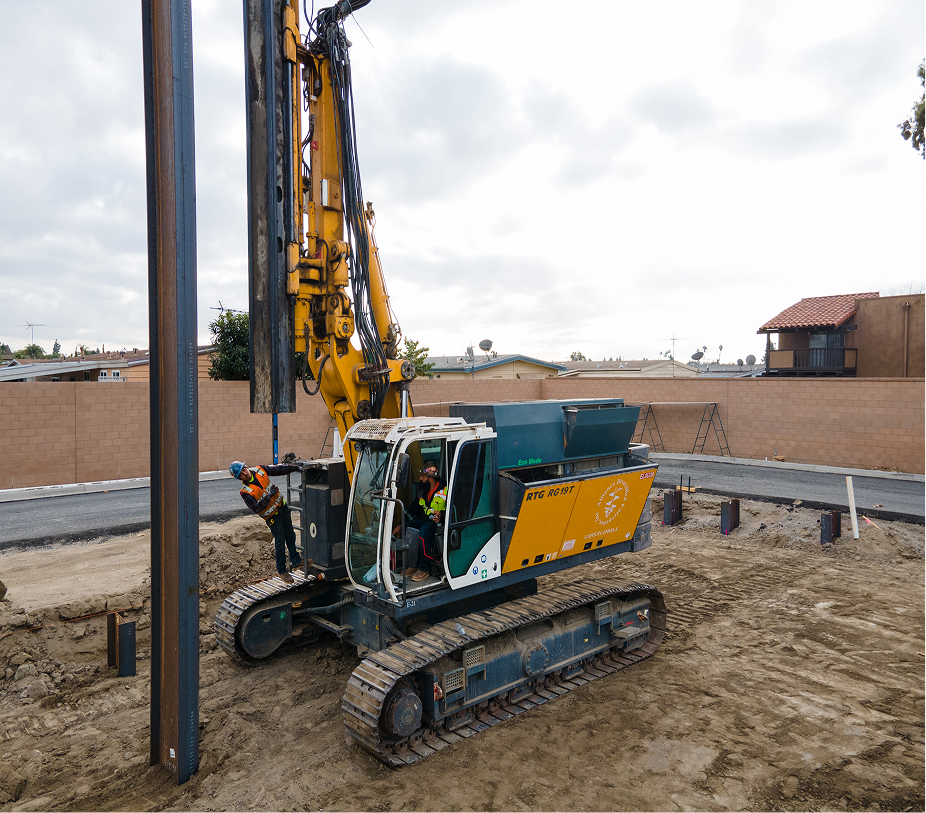
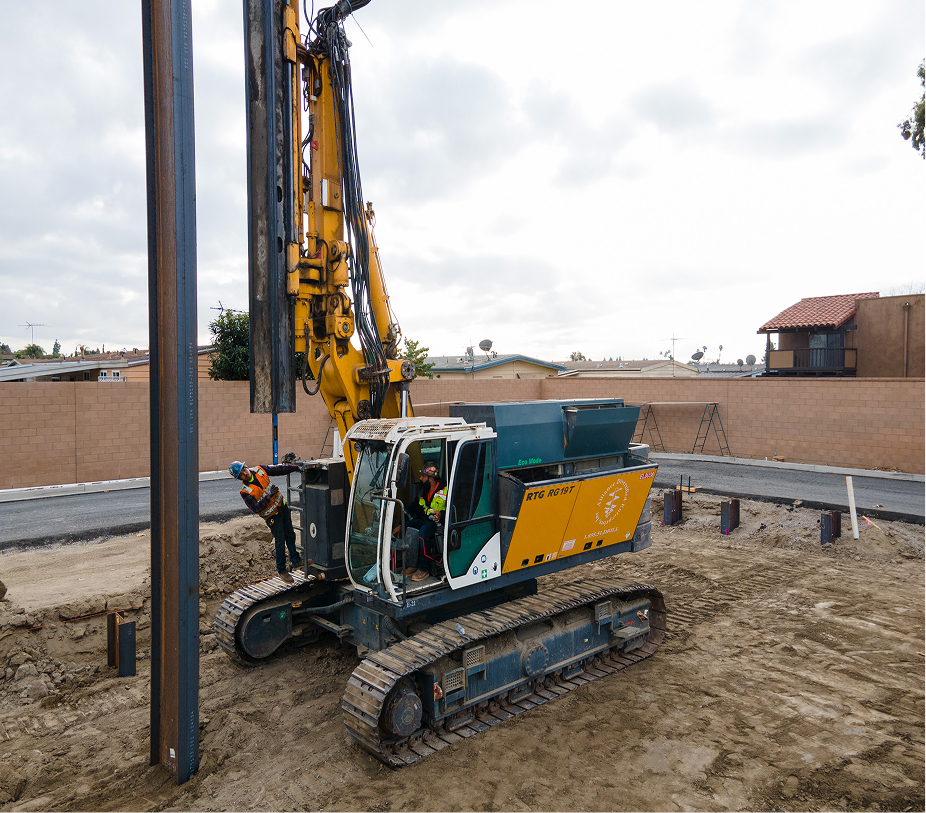
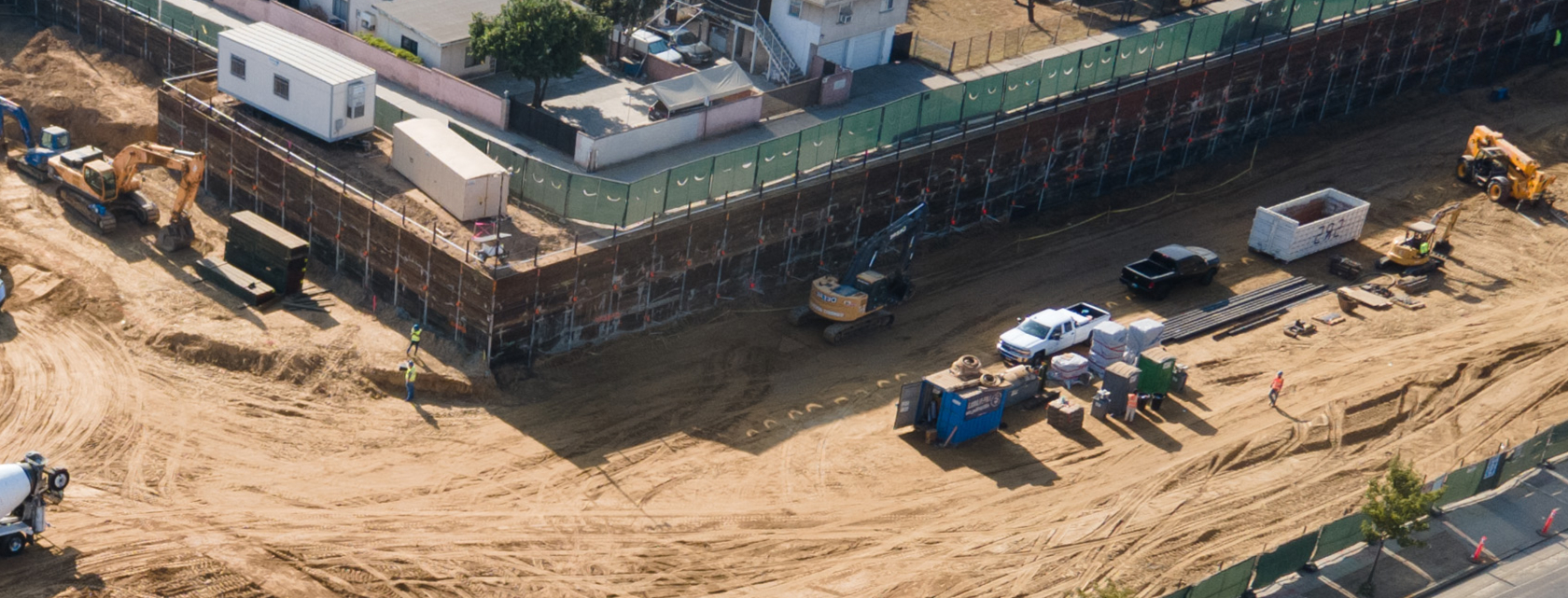
- Soldier Beam & Lagging: Soldier beam and lagging is a flexible earth retention system consisting of vertical steel H-piles (soldier beams) installed at regular intervals, with horizontal lagging placed between the flanges as excavation progresses. The beams are typically installed using drilled shafts or vibratory driving methods, depending on subsurface conditions and project constraints. As soil is removed in lifts, timber, precast concrete, or steel lagging is incrementally inserted to retain the exposed face.
- Secant Pile Walls: Secant pile walls are a high-performance earth retention and groundwater control system formed by constructing interlocking concrete piles. Using specialized drilling equipment, primary (soft) and secondary (reinforced) piles are installed in sequence to create a continuous, rigid barrier. This method is ideal for projects requiring structural support and water cutoff in challenging soil conditions, including urban environments with limited access. Secant piles offer excellent strength, minimal ground movement, and flexibility in layout, making them a preferred solution for deep excavations, basements, and critical infrastructure.
- Sheet Piling: Sheet piling is a versatile and efficient solution for earth retention and excavation support, consisting of interlocking steel sheets driven into the ground to form a continuous wall. Installed using vibratory or press-in methods, sheet piles provide immediate structural support and can be used in both temporary and permanent applications. This system is particularly effective in soft soils and waterfront environments, offering reliable earth and water retention with a relatively small footprint. Sheet piling delivers speed, cost efficiency, and adaptability, making it a proven choice for a wide range of civil and marine projects.
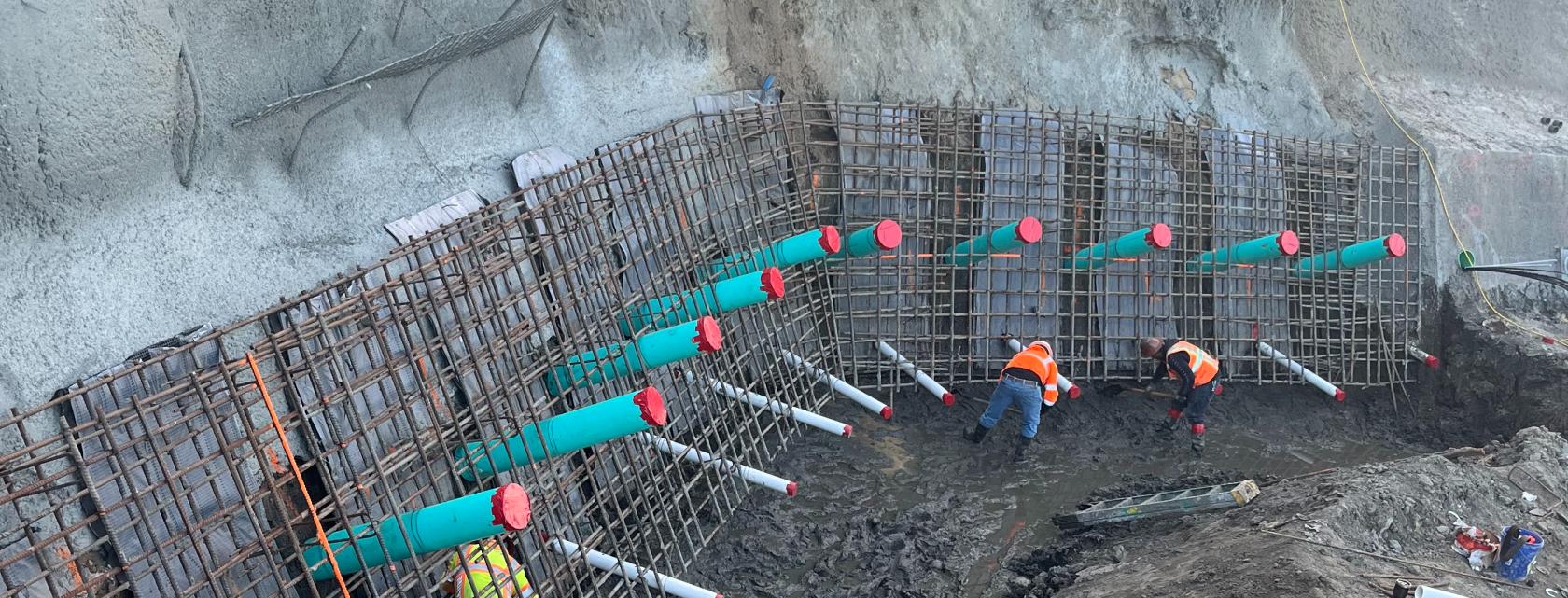
- Tiebacks & Rakers: Tieback anchors—installed as grouted, post-tensioned elements drilled behind the wall—are commonly used to transfer loads into competent soil or rock, reducing bending demands on the beams and limiting deflection. In areas where tiebacks are not feasible (e.g., property line constraints or easement restrictions), internal support such as rakers or cross-lot bracing can be utilized.
Vibratory Installation
Vibratory soldier beam installation is a fast, low-impact method for placing structural steel beams used in shoring and earth retention systems. Using high-frequency vibratory drivers, steel piles are advanced into the ground with minimal excavation, reduced noise, and less vibration compared to traditional impact driving. This technique is especially well-suited for urban and sensitive environments, allowing for precise alignment and efficient installation in a wide range of soil conditions. Vibratory installation can accelerate project schedules while minimizing disturbance to adjacent structures, utilities, and surrounding communities, making it an ideal solution for modern excavation support systems.