As Southern California heads into the 2026-27 rainy season, El Niño is once again becoming an important consideration for property owners, developers, general contractors and project teams working on or near sloped terrain.
In its ENSO Diagnostic Discussion issued September 10, 2026, NOAA’s Climate Prediction Center stated that El Niño is strengthening, with a greater than 90% chance of a very strong event during the Northern Hemisphere fall and winter 2026-27. The same discussion estimated a 75% chance that the October through December 2026 season will produce a historic event, one exceeding the strength of previous El Niño events dating back to 1950. NOAA’s seasonal outlook issued September 17, 2026 also favors above-normal precipitation across the southern half of California for October through December, with the probability of wetter-than-normal conditions increasing across California later in the winter and reaching 50 to 60 percent near the coast from December through April. These forecasts describe probabilities, not guarantees for any individual storm, location or property
For construction sites and properties located on steep or historically unstable terrain, however, periods of prolonged or intense rainfall are a good reason to pay closer attention to slope conditions.
Why Heavy Rain Can Affect Slope Stability
Rainfall becomes particularly important when water begins accumulating within soil and rock.
As the ground becomes wetter, the conditions holding a slope in place can change. Water can increase the weight of soil, contribute to erosion and seepage, and affect the forces acting within a slope. These conditions do not automatically mean a slope will fail, but they can become contributing factors where other vulnerabilities are already present.
The U.S. Geological Survey has studied rainfall-triggered landslides throughout Southern California and notes that the region is particularly susceptible to shallow landslides. USGS also reports that these events become more likely as the ground approaches saturation and is then exposed to additional intense rainfall.
That means the concern is not necessarily one large storm. In some cases, the cumulative effect of repeated storms can be just as important.
Sites That May Deserve Additional Attention During the Rainy Season
Every site is different, and slope conditions should be evaluated by qualified professionals. Some situations may warrant additional attention before or after periods of heavy rain, including:
- Steep or over-steepened slopes
- Existing cut or fill slopes
- Hillsides with known historical movement
- Slopes showing erosion or drainage problems
- Sites with retaining or earth-retention systems
- Areas with visible cracking, seepage or previous repairs
- Construction sites where grading has changed existing conditions
- Difficult-access slopes where inspection or construction may be challenging
Changes in drainage can also matter. Water being redirected toward a slope, blocked drains, concentrated runoff or new areas of seepage can alter site conditions during the rainy season.
Warning Signs After Heavy Rain
Potential slope movement does not always happen without warning. The California Geological Survey advises people near sloped areas to watch for changes such as new ground cracks, tilting trees, bulging at the base of slopes, new springs or seeps and material moving downhill following heavy rainfall. For a closer look at each of these conditions and what to do if you notice them, see Signs of Slope Instability After Heavy Rain.
What Happens When a Slope Requires Stabilization?
When potentially unstable conditions are identified, the first step is typically understanding the site and determining the appropriate engineered response.
Depending on the geology, site constraints, structures involved and project requirements, a stabilization system may use one or several construction methods.
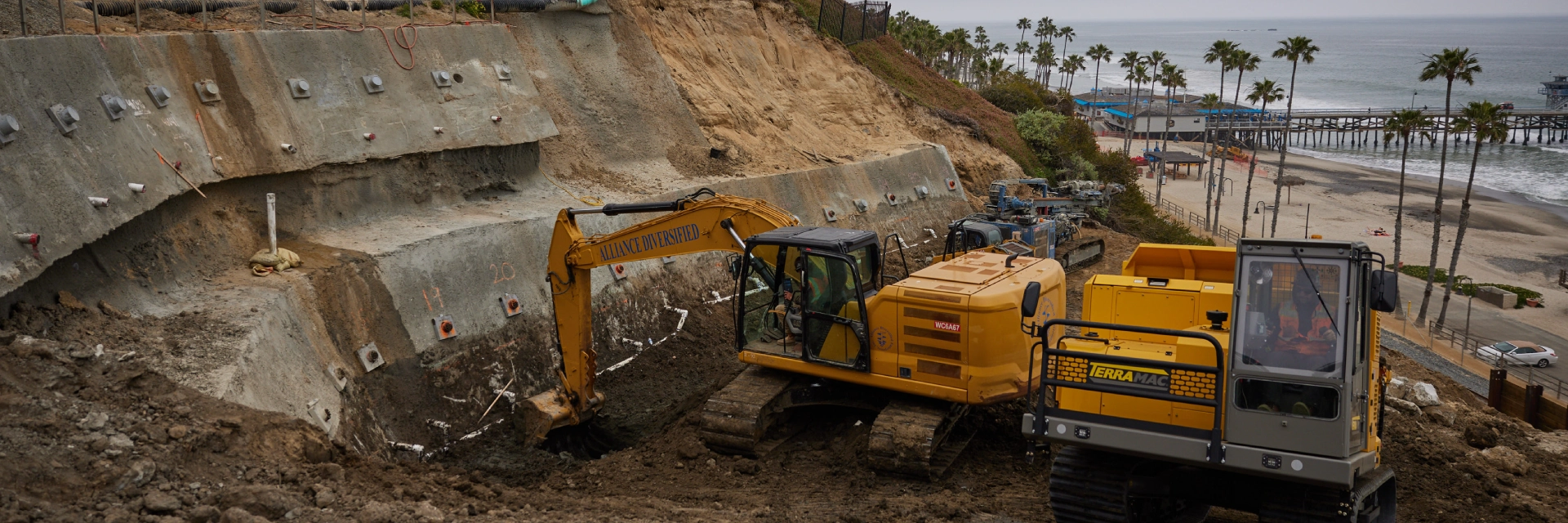
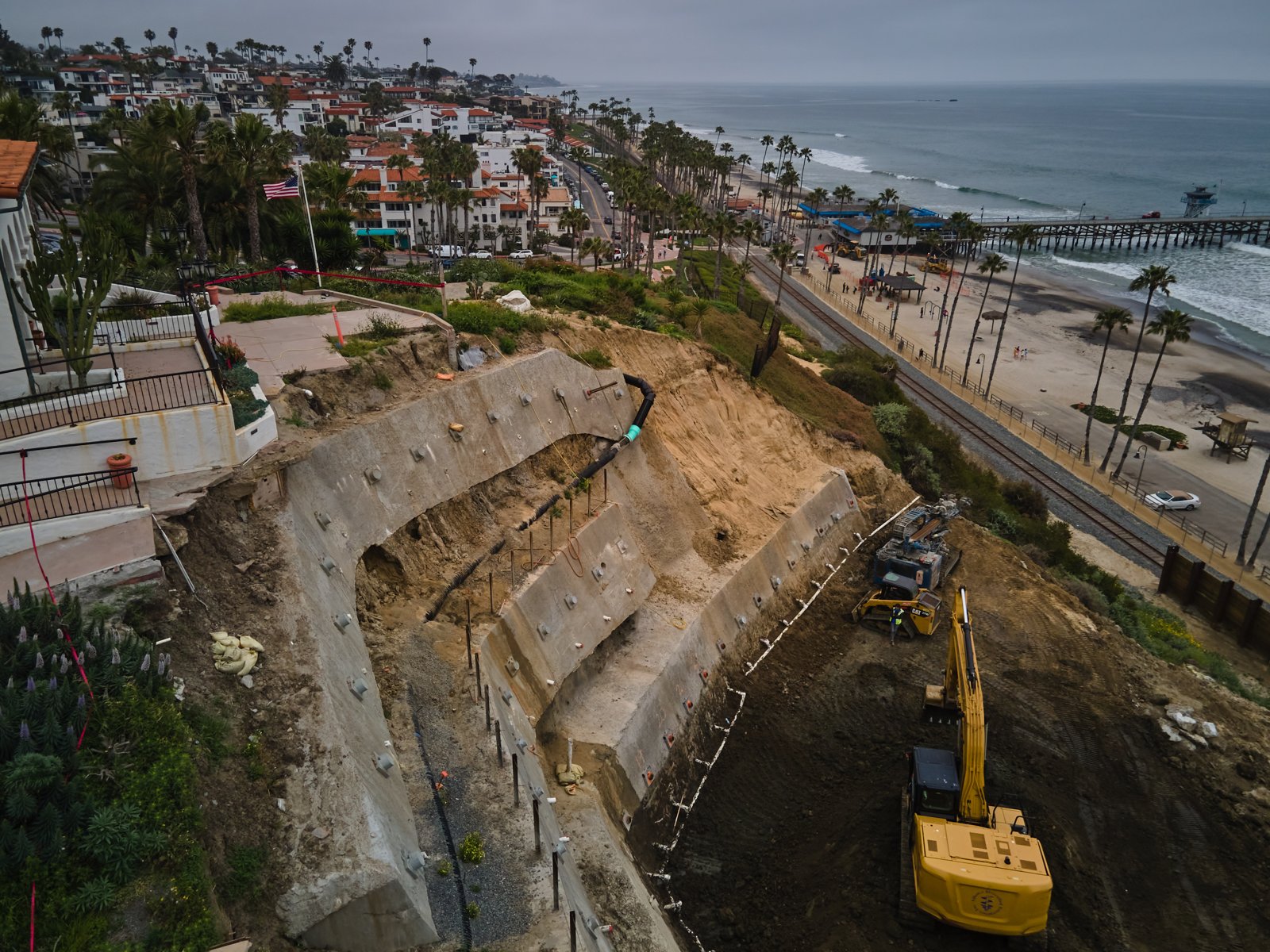
ADEI’s slope stabilization and earth-retention capabilities include:
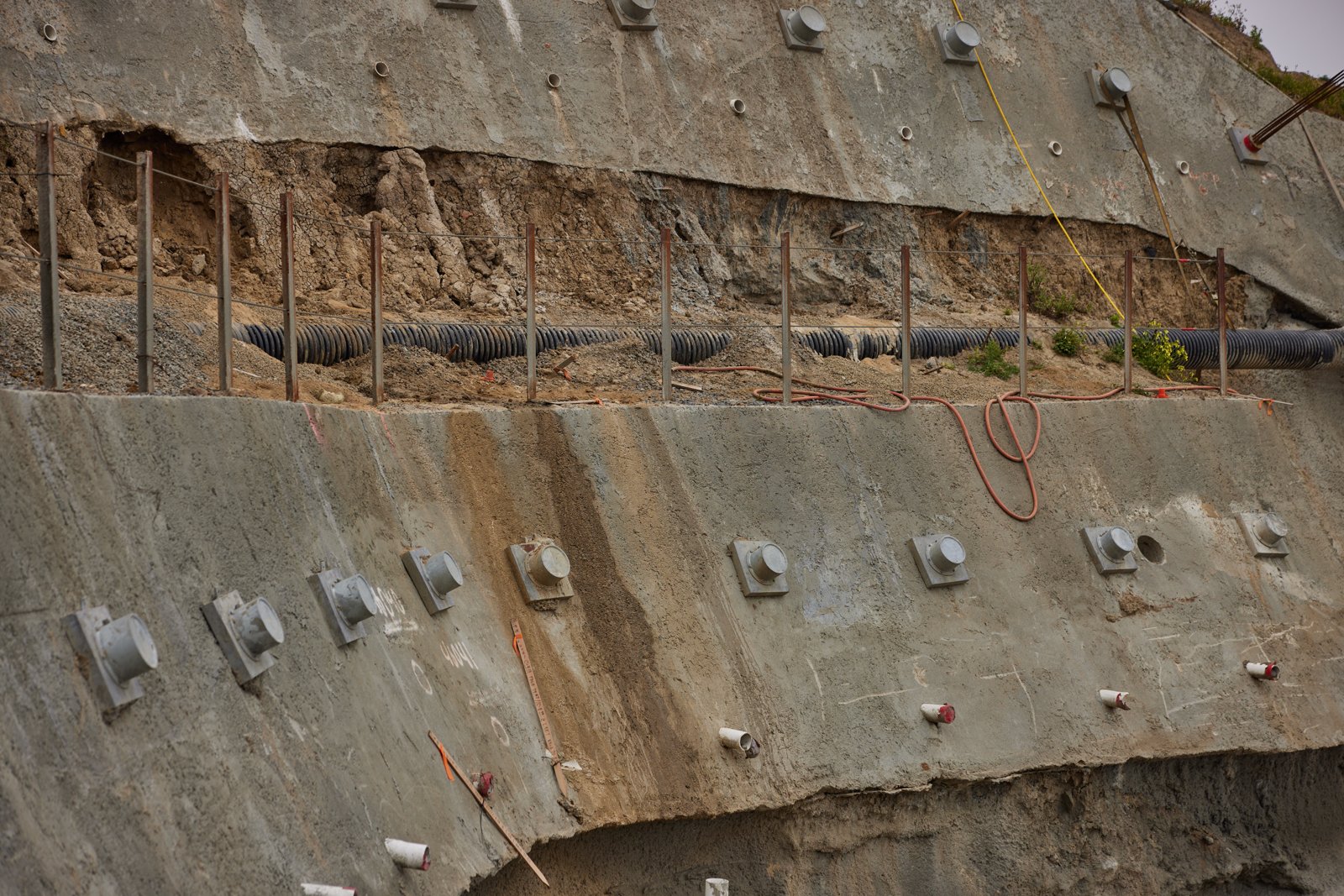
Soil Nail Walls
Steel piles and lagging can be used to retain earth and may be combined with tieback anchors depending on project requirements
Shotcrete Retaining Walls
Structural shotcrete systems can provide permanent earth retention while accommodating challenging terrain.
Shear Pins, Grade Beams and Tiebacks
These systems may be incorporated into engineered solutions designed to resist lateral soil movement.
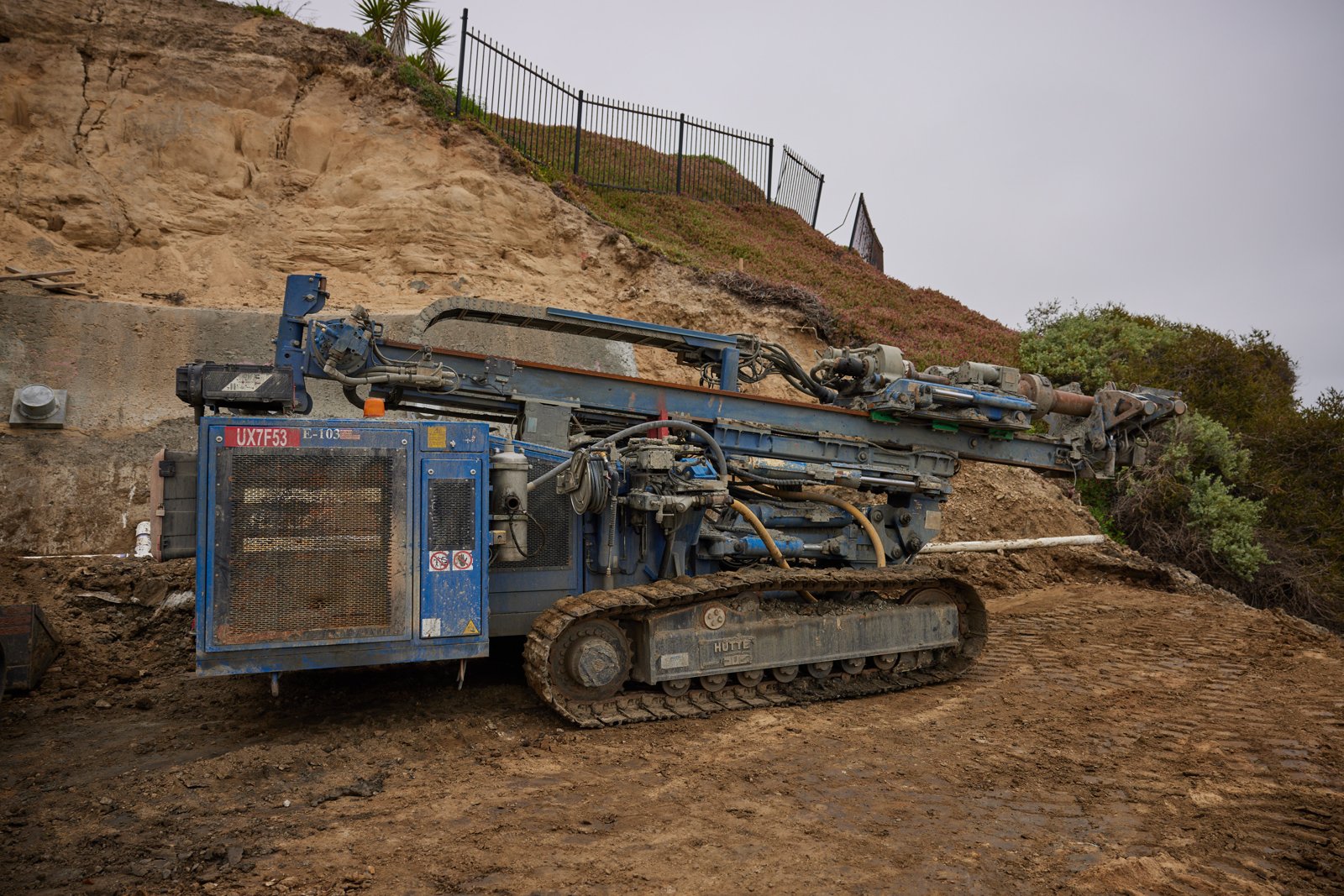
ADEI also operates portable and limited-access drilling equipment for hillside locations, backyards, constrained urban sites and other locations where standard drilling equipment may not be practical.
Why Limited Access Matters on Hillside Projects
Slope stabilization projects frequently create a basic logistical challenge: the area that needs work can be one of the hardest areas of the property to reach.
Steep grades, existing buildings, narrow access points, walls, landscaping and neighboring properties can limit the equipment that can be brought onto a site.
Specialized limited-access drilling equipment allows contractors to perform certain drilling and stabilization operations in areas that would otherwise be difficult to reach with conventional rigs.
For project teams, planning for access early can reduce surprises once stabilization construction begins.
Preparing for the 2026-27 Rainy Season
El Niño does not mean every Southern California hillside will experience a problem, and seasonal forecasts cannot predict conditions at an individual property.
What the current outlook does provide is a reason for contractors, developers and property owners working around slopes to remain aware of changing site conditions as the rainy season develops.
If movement, erosion, seepage or other changes become visible, the appropriate engineering and geotechnical professionals should evaluate the condition and determine what action, if any, is required.
When an engineered project requires specialty drilling, earth retention or slope stabilization construction, ADEI has the equipment, engineering and field capabilities to work on complex and limited-access sites throughout Southern California.